The cabinet fits above the basin, but its door catches the return wall. The front looks generous, but the shelves are too shallow for the items the range is meant to store. These are the kinds of layout mismatches a front-view photograph can miss.
For UK bathroom importers, wholesalers and own-brand buyers, a bathroom mirror cabinet with lights needs to work as storage, a moving assembly and an illuminated product. A clear specification helps your buying, installation and after-sales teams work from the same reference.
Use these seven checks before approving a sample or placing a bulk order.
Start with a design, then define the version
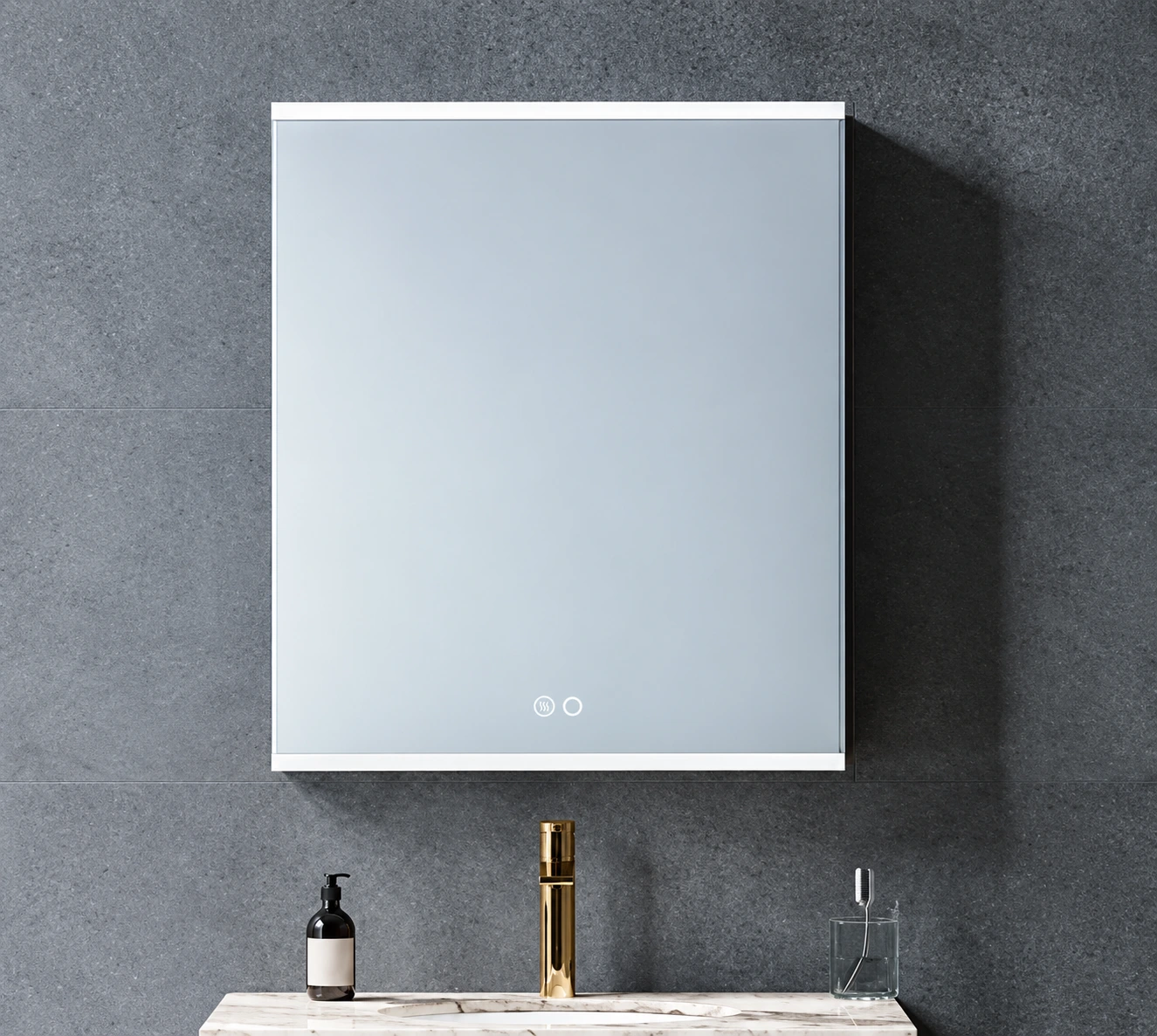
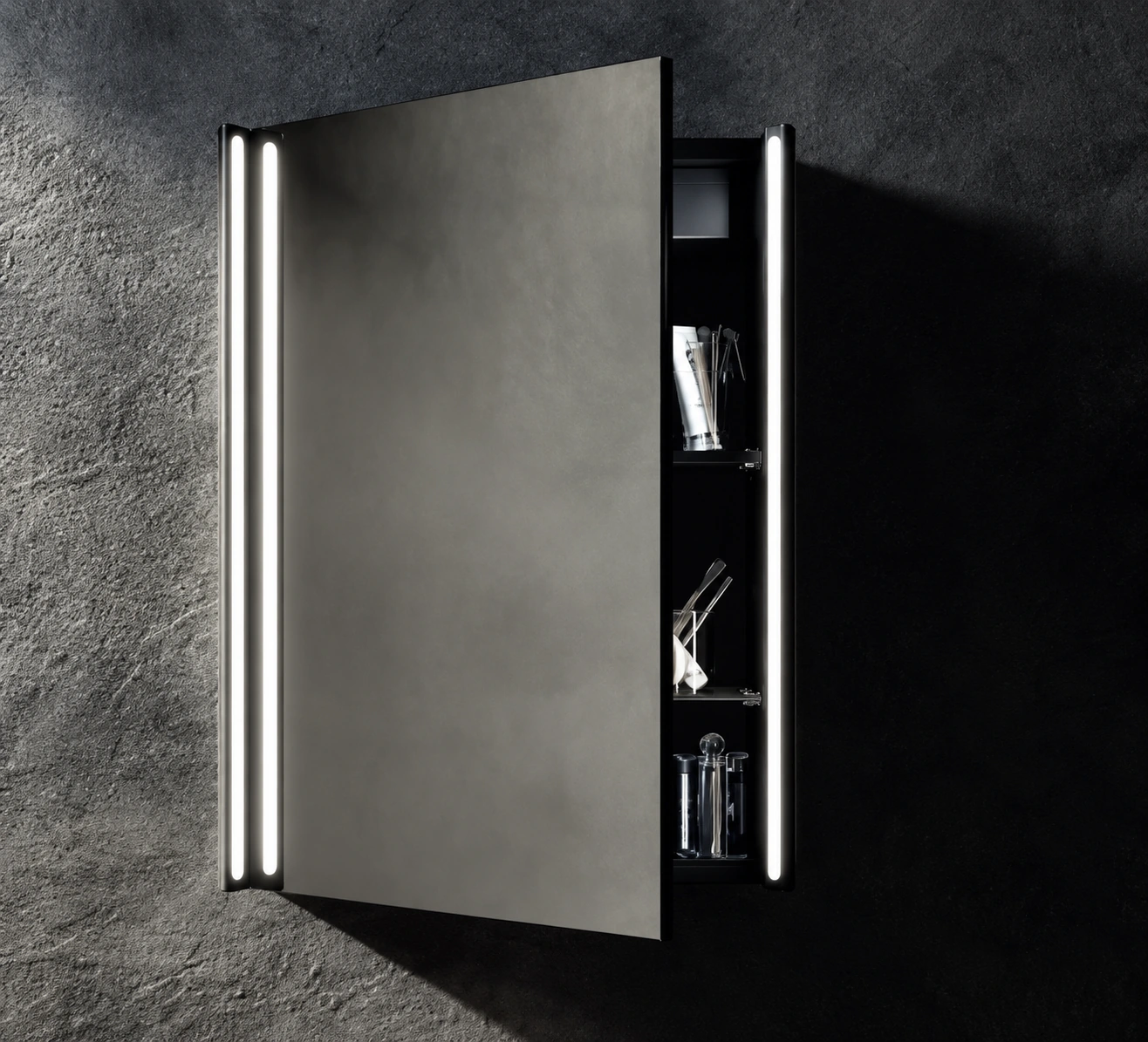
Two designs in the AoTi mirror cabinet collection provide a starting point:
| Design reference | Published materials | Published lighting layout |
|---|---|---|
| JG001B | High-definition mirror and aluminium cabinet body | Upper and lower front lighting |
| JG004B | High-definition mirror and aluminium cabinet body | Lighting on both sides |
Choose the visual direction first, then use the checks below to describe the version you need. These references do not establish a standard depth, door mechanism, mounting method or electrical configuration. Dimensions and functions need confirmation for the selected order.
1. Check the depth as carefully as the width
Request overall width, height and closed depth in millimetres. Distinguish the mirrored front from the cabinet body, trim and any projecting controls.
For example, a nominal width alone will not tell a bathroom furniture brand how the cabinet sits above its vanity. Add the maximum projection from the finished wall and the available space beside and above it.
Put in the brief: a dimensioned drawing showing the front, cabinet body and finished projection.
2. Test usable storage with real items
External depth is not shelf depth. Hinges, lighting components and other fittings can occupy space inside a mirror cabinet.
Request internal dimensions and the proposed shelf layout. During sample review, try the types of bottles and accessories the range is intended to accommodate. Check whether they can be placed and removed comfortably, including at the edges of the cabinet.
Agree shelf and cabinet loading information for the actual construction.
Put in the brief: internal dimensions, shelf positions and the agreed loading information.
3. Open the door against the bathroom layout
A cabinet can fit when closed and still be awkward to use. Review the hinge side, door movement and clearance beside a return wall, tall unit or nearby fitting.
The JG004B reference image shows a mirrored door open. That makes door clearance worth discussing; it does not establish its opening angle or whether the door can be reversed.
If your range needs left- and right-hand versions, list them separately. On the sample, check access to the shelves, alignment and the agreed closing behaviour.
Put in the brief: door handing, clearance requirements and any alternative version needed.
4. Resolve the mounting method before approving the range
Confirm whether the selected version is surface-mounted, recessed or available in both arrangements.
For a surface-mounted cabinet, review the fixing information and finished projection. For a recessed cabinet, obtain the product-specific aperture, body-depth and trim details. The size of the mirror frontage is not an opening dimension.
Have the project team assess the wall, services, support and access against the actual installation information. A mounting option offered on another product does not confirm its availability on the AoTi design you selected.
Put in the brief: the intended mounting method and the drawing required for installation planning.
5. Separate lighting from the other functions
JG001B and JG004B offer different published lighting layouts. Use that difference to discuss appearance, then specify how the proposed electrical version should operate.
Ask which controls operate the light, whether brightness or colour-temperature adjustment is available, and what happens after power is removed. Confirm a demister, internal light or charging socket individually rather than treating them as part of the word “illuminated”.
Our bathroom mirror lighting and controls guide covers these operating questions in more detail.
Put in the brief: a feature list marking each requirement as included, optional, unavailable or awaiting confirmation.
6. Make the approved sample a repeat-order reference
Give the sample an identifier and link it to the drawing revision. Your buying team, supplier and inspector should be checking the same configuration.
Keep the acceptance record short enough to use:
| Check | Record |
|---|---|
| Dimensions and storage | Overall measurements, internal space and shelf layout |
| Doors and finish | Handing, movement, alignment and approved visible details |
| Installation | Mounting method, fixing drawing and supplied fittings |
| Electrical functions | Agreed features checked against the operating instructions |
| Identification | Sample reference, drawing revision, labels and carton contents |
Resolve differences before treating the sample as the bulk-production reference. For own-brand orders, review the product description, artwork and English instructions alongside it.
Applicable electrical equipment supplied into Great Britain has documentation and conformity requirements covered by GOV.UK guidance. Have the responsible compliance team check the finished configuration and destination, including the separate route for Northern Ireland.
Put in the brief: the sample approval record, acceptance criteria and required product documents.
7. Agree packaging and the replacement unit before shipment
Think beyond the export carton. A wholesale order may pass through a UK warehouse and onward delivery before reaching an installer or customer.
Discuss protection for the mirrored front, cabinet body, shelves and fittings, including restraint of moving parts. Agree any transit-test requirements and the evidence expected.
Then establish what can actually be replaced. If a mirror is damaged, is the service unit the glass, a complete door or the whole cabinet? Ask the same question about hinges, shelf supports and electrical components.
Agree part references, compatibility, costs and supply terms. Define the photographs, carton details and batch information needed for a damage report before dispatch.
Put in the brief: the packaging specification, claims procedure and available replacement assemblies or parts.
Frequently asked questions
Can every bathroom mirror cabinet be recessed?
No. Use the mounting method and installation drawing confirmed for the exact product. A front-view image or nominal width does not establish recess dimensions.
Does a mirror cabinet with lights include a demister or socket?
Not automatically. Confirm each function in the ordering specification and check the supplied sample against it.
What should an own-brand enquiry include?
Send the design link, dimensions, quantity, destination, finish and mounting method. Add storage, lighting, artwork, documentation, packaging and service requirements so the proposed configuration can be discussed together.
Turn your preferred design into a purchasing brief
Considering JG001B or JG004B? Send AoTi Mirrors:
- The product link and required width, height and maximum depth.
- Your quantity, UK delivery destination and intended mounting method.
- The storage layout, lighting functions and finish you need.
- Own-brand packaging, documentation and replacement-parts requirements.
We can discuss the proposed configuration and which details need confirmation for a quotation and matching sample. For the wider order brief, use our Trade & Project Supply page.
Email: [email protected]
WhatsApp / WeChat: +86 15914555118
Factory Address: Shangbai Industrial Zone, Luocun, Nanhai District, Foshan, Guangdong, China